ISKCON's
System Of
Management
“ There Is No Need Of Any Changes”
By
ameyatma das {ACBSP}
June
21, 2004
(Downloadable Word Doc Version)
In Srila Prabhupad’s last will he stated:
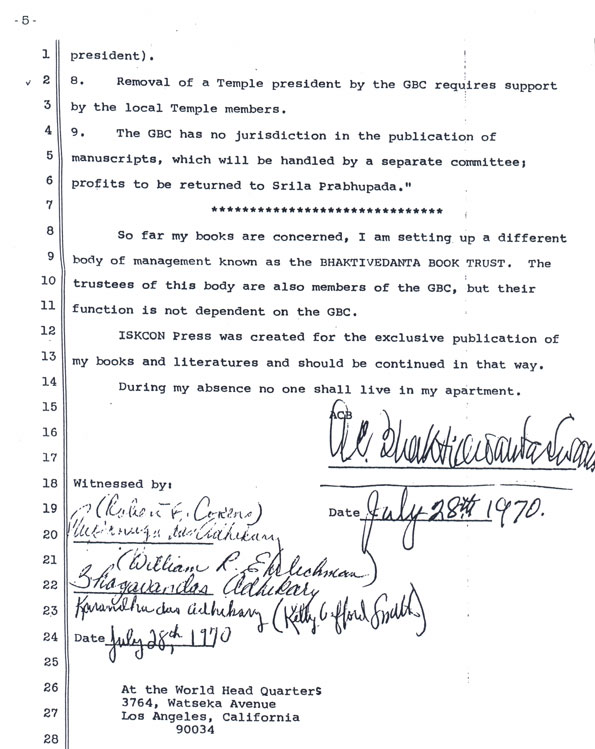
“The system of management will continue as it is now. There is no need of any change.”
PURPOSE OF THIS ARTICLE:
This article intends to point out that the system of management that Srila Prabhupad had worked so hard to put into place, to work out and fully test, that was in place and used in managing all of ISKCON for years prior and at the time of those instructions and up to the time of his passing physically from this material world; that system has changed. And it has changed significantly.
This is a deviation from Srila Prabhupad’s order. This article is meant to spark an understanding of this deviation. To inspire a wide-spread interest to correct the deviation. To restore ISKCON’s management back to it’s proper position.
Dedicated To:
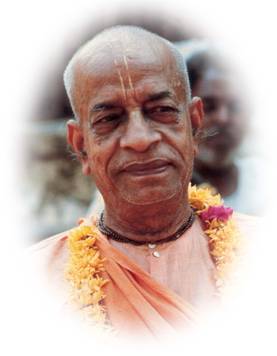
Jai Om Vishnupad Paramahamsa Paravrajaka Acharya Astotara Sata [108] Sri Srimad
His Divine Grace A, C, Bhaktivedanta Swami PrabhupadFounder-Acharya of the International Society for Krishna Consciousness
Chapter One |
The ISKCON System Of Management In Place Prior To November, 1977:
General Management Of The Society
The author of this essay joined in 1973 in Los Angeles, then the world headquarters of ISKCON. I can attest that by and after that date all devotees joining (which became the massive bulk majority of ISKCON by the time of Srila Prabhupad’s disappearance) had extremely very little direct dealings with Srila Prabhupad, if any at all. No direct guidance, no direct question and answer sessions. The system or structure to provide this sort of guidance that was well established by summer of 1973. The structure was that of the GBC/ Temple President (or designated temple authorities) / Sannyasis / respected senior devotees.
This management structure was established and was the system by which all new devotees were trained and guided in their spiritual and new material lives. Our association with Srila Prabhupad was to hear his lectures and read his books. Hear / read his instructions. Understand and accept his instructions. And, most importantly, implement and follow his instructions. The TP / GBC / Sannyasi structure of management provided all other direct guidance. Spiritual/Philosophical guidance as well as social and personal guidance.
For the management of the society Srila Prabhupad, following the instructions of his spiritual master, set up the Governing Body Committee, the GBC. The world was divided into zones and each GBC member was assigned a specific zone to directly manage.At the time there was only one initiating guru, Srila Prabhupad, and as such he held the ultimate authoritative position, above the GBC. As the initiating spiritual master it was also the duty and position of the disciples to accept him as their ultimate authority, their divine Master.
He instructed that in his physical absence the GBC, as a whole, would become the ultimate authority for ISKCON.
Tasks And Duties Of The GBC And Position Of The GBC Members
One duty of the GBC is to keep up the standards that Srila Prabhupad had personally set and established.
The other duties were to give spiritual and philosophic guidance, and also social and personal guidance. The long-term purpose for this was to prepare the GBC to manage the society in Srila Prabhupad’s absence. The immediate purpose was to handle the tedious tasks of day-to-day management, freeing Srila Prabhupad to translate and write his books.
It is to be pointed out here that these duties and functions are normally performed directly by a guru for his disciples in a small ashram, and were directly performed by Srila Prabhupad in the very beginning.
Chapter Two |
The ISKCON System Of Management Currently In Place (2004)
General Management Of The Society
The GBC still remains as the ultimate authority for ISKCON.
The system remains that the basis of our philosophy is and shall forever remain the teachings of HDG ACBS Srila Prabhupad.
The GBC-temple authority structure that Srila Prabhupad set up to give all other guidance, helping to understand the philosophy, giving social and personal guidance, that system should remain as it was and thus we should derive that guidance from the GBC structure just as we had in the past.
However, this system is today altered and modified and that is the topic of this essay.
By Definition Guru Becomes The Ultimate Authority For Disciple
By definition, one accepts a spiritual Master. One surrender’s one’s very life at the feet of his accepted Master. That is definition of guru and accepting the guru. One is accepting that person as one’s ultimate authority. To take guidance and instructions from the guru, the master. That is guru.
New Conflict Of Authority
This is where we see conflict. Guru means one’s ultimate authority, accepting that person as one’s Master, authority and guide.
But Srila Prabhupad had set up the GBC / Temple structure of management, and authority. The very purpose and duty of that GBC / Temple structure was to give guidance, set and maintain the standards and to retain the position of ultimate authority in the ISKCON ashrams and mission. In this way, the GBC and temple structure of management was designed and set up by Srila Prabhupad to provide virtually all of the duties that would normally be ascribe to the initiating guru. In fact, that is how the bulk majority of Prabhupad disciples were trained themselves.
In other words, this system of taking guidance from that GBC /Temple authority structure was good enough for Prabhupad’s own direct disciples, and enjoined not only Srila Prabhupad’s approval, but he set it up for this purpose. There fore I find it a lost argument to try and say that such a system is not good enough for ISKCON after his disappearance.
The conflict is when the new initiating gurus take it upon themselves to carry out the functions of giving guidance, whether it be philosophic clarification, social or personal guidance, directly to the new initiated.
Why is this a conflict? Because, these are the very clear duties of the GBC / Temple authority structure Srila Prabhupad had set up, and asked us not to change.
When an initiating guru gives such guidance directly, he is usurping the duties and authority of the management structure that Srila Prabhupad had set up.
I am writing this from personal view. When I joined I very much wanted direct and personal guidance from Srila Prabhupad. But, he instructed the devotees in general – please go through the system of management he had set up. Approach the Temple authorities, the GBC, sannyasis and senior devotees for such guidance. Do not unnecessarily burden him with so many repetitive questions and needs for guidance. He said his instructions were all there, in his books and letters, the leaders were to now give that same guidance to the newer devotees. We were not to directly approach him for such guidance. He had set up the GBC structure of authority for that purpose.
I am not writing this in support of rtvik, but, I am writing it because I see that system has been disrupted and has changed. And I understand that to be a deviation because Srila Prabhupad said the system he set up must not be changed.But, then, how can one surrender to a guru, accepting him as their ultimate Master, yet, as a member of ISKCON remain accepting the GBC as one’s ultimate authority? One can have only one master, one guru.
It is the purpose of this article to show that this is the foundational problem in current ISKCON. This is the very heart of “guru” issue, and is the source of all the many problems that follow. The problem is, one cannot have two masters. One cannot accept the ultimate authority of the GBC and abide by the system Srila Prabhupad had set up for attaining guidance, and at the same time accept another master.
Trying to do so causes a very disruptive conflict of authority. It is this issue that the GBC have been trying to define for the past 27 years.
New Division of ISKCON Managerial Authority
Specifically many GBC resolutions and discussions have been centered on trying to define what authority or duty belongs to the GBC and what belongs to the current Diksha gurus. So much effort expended on trying to define how the new disciple must see Srila Prabhupad’s teaching as the philosophical guide, the GBC as their ultimate authority and over all guide, and yet the diksha guru also as some sort of master and authority as well. And trying to figure out what guidance the GBC should give, what guidance the guru should give. Yet, in doing so, in many respects, the position and authority of the GBC and temple structure of authority was eroded. How? Because what ever duties were once the responsibility of the previous system Srila Prabhupad set up for how devotees obtained guidance and was given over to the new diksha gurus, by that much the previous system was eroded and changed. So many issues center on these topics, so many resolutions. So much trying to figure this out.
This is crux of the whole guru issue and many problems in ISKCON, just what are the duties and position of the new guru and how their duties and roles integrate with the existing GBC authority and how Srila Prabhupad’s guidance plays into everything.Duties & Position of the GBC and Current Diksha gurus
We’ve outlined the management system and how new devotees obtained guidance from that system in Srila Prabhupad's physical presence. Since then several systems have been tried since Srila Prabhupad’s disappearance to accommodate the new diksha gurus into that established system.
The Zonal Acharya
This was the first attempt. Many have documented that this idea came from consulting Srila Sridhar Maharaj and possibly Srila Narayan Maharaj, and many also understand that to have been against the desire and instructions of Srila Prabhupad. Srila Sridhar Maharaj’s main point for suggesting the Zonal Acharya system rests at the heart of this issue as I have also pointed out. His point was that you cannot have two authorities. A disciple cannot accept the GBC as ultimate authority, and accept a spiritual master, as the spiritual master, by definition, is taken as one’s master, one’s ultimate authority. You cannot have two such masters
He also insisted that a guru or acharya cannot have any higher authority over him regulating or restricting his authority. That, he saw, as unacceptable. A guru is his own authority, he does not act as guru under any other authority (then his own guru). He was insistent that the rtvik system was not bonafied, and so he suggested major changes to the system Srila Prabhupad had set up.
He suggested that the GBC zones then in existence become zones for the new gurus. The gurus would also be the GBC for those zones. These gurus would be known as Zonal-Acharyas. This way, for the particular zone they presided over, that GBC Zonal-Acharya would be the absolute or ultimate authority for that one zone. And, the GBC as a whole would not really have much authority over the Zonal-Acharyas.
Obviously, this was a major deviation from both the system of management and GBC that Srila Prabhupad had so painstakingly set up, and it was a deviation from his instruction that the system he had set up not be changed.
The result of this system was tremendous upheaval and misdirection of the whole mission.
By 1985-87 this issue came to a head, and ISKCON and the GBC admitted that system was a deviation and was wrong. The Zonal-Acharya system was abandoned.
The Current Diksha Guru
At that time, the GBC still held on to the conviction that the rtvik system was not bonafied, that Srila Prabhupad wanted us all to become guru, thus, that system would not be considered at all. Rather, the GBC began to contain, control, rope-in many of the freedoms of the gurus. The GBC tried to retain the original idea that the GBC remained the ultimate authority, even over and above the gurus. (This was one of the points made by Sridhar, that this is not consistent with definition of guru.) However, that GBC authority was also shared with the diksha gurus. Thus, in abolishing the Zonal-Acharya system the GBC set forth a number of resolutions trying to define the duties and position of the guru. Even controlling where and how they were to be worshipped Even the dakshin given to the initiating guru. This has proven to be an on-going struggle by the GBC to continually define what is the position and duty of the guru, and where their authority fits in. What guidance should the guru give, what guidance the GBC-Temple authorities give?
However, it has to be noted that when the Zonal-Acharya system was established the system Srila Prabhupad had set up and that was in place was severely changed and limited. When the Zonal-Acharya system was established the previous system of how devotees obtained guidance was totally changed. New devotees no longer sought personal direction and guidance from the GBC / Temple Authorities, Sannyasis or Senior Devotees, but all such guidance was to be taken only from the local Zonal Acharya and those they designated. When the Zonal/Acharya system was disbanded the GBC did not restore the system of management, that of how new devotees were to get personal guidance and direction from the GBC/Temple/Sannyasi/Senior devotee system as was set up under Srila Prabhupad. Rather, they continued to support the idea of this guidance for the new devotees to be taken directly from their initiating gurus, whether that guru was a local GBC or not, or whether they even were a GBC. Basically the GBC were simply taking the Zonal-Acharya system and trying to curb it down, reform it, reshape it, but did not actually restore the previous GBC-Temple Authority system that was in place for giving all guidance. Many aspects of giving guidance were still given to the diksha guru.
GBC-Provided Guidance Is Today Disrupted.
By abolishing the Zonal Acharya system and yet not re-establishig the original system of guidance and authority the result was further complications and eroding of the system Srila Prabhupad set up. Since the new devotees, which by 1987 were the greater majority in ISKCON, especially since many of Srila Prabhupad’s disciples had left due to their rejection of the Zonal Acharya system, the majority of devotees, the new devotees, now took their personal guidance from their respective diksha gurus and not the local GBC or local temple authorities, local sannyasis or senior devotees. Thus, the social position of those social entities diminished tremendously from their social position and the social respect they carried in the system of management that existed prior to 1978. And, since 1987 the social position or social importance of the local GBC, local temple authorities, sannyasis and senior devotees has continued to diminish.
Another problem this has created is that of the older devotees, the direct Prabhupad disciples? Previously all devotees took their guidance from the system of management Srila Prabhupad had set up, ie the GBC/Temple authorities, etc. With the introduction the Zonal Acharya system the local or Zonal GBC not only retained the social prominence but actually their prominence increased in an unauthorized and detrimental way. The Zonal GBC was now the Zonal Acharya and now acted alone as the absolute authority for their zone. This was not the GBC system SP has set up where the GBC as a whole was the ultimate authority and not individual GBCs. But, under the Zonal-Acharya system the Zonal-Acharya-GBC became like monarcial dictators for their zone. Under that system the authority and social prominence of the temple authorities, sannyasis and senior devotees was diminished and severely weaken as the ZonalAcharya because the all-powerful authority of their zone. This was a major deviation from Srila Prabhupad’s system of management he had set up. However, under that scenario it at least kept in tact one feature of the original system of management. That was that it provided, as before, a single system of authority for both the older devotees, the direct disciples of Srila Prabhupad, and the new devotees. As long as you resided in a specific zone, that zone had one authority and all devotees were able to seek guidance from that one authority, regardless if they were new or older devotee.
However, when the Zonal Acharya system was disbanded, this aspect was also disrupted. Because the original system of personal guidance and authority was not restored back to that of the GBC / Temple / Sannyasi / Senior devotees, but that personal guidance was to remain, for the new devotees only, with their guru. Such authority for giving such guidance was not handed back to the original system of management. This created so further division. No longer were there Zonal Acharyas. A new devotee could now seek initiation from any guru anywhere in the world. I may live in Los Angeles, but I can now take as guru someone who has no authority in LA temple. They may serve mostly in India, or Europe, or East Coast US, it no longer mattered. So, a 10 new devotees living in a temple could now have 10 different authorities, each their own authority, from whom they now desire to seek their personal guidance from. And, it could well be that none of those 10 authorities have anything managerial positions in their local temples. This is a complete and total deviation from the system that Srila Prabhupad had set up.
And, it is even worse. For as the new devotees came, less and less did the new devotees look toward their local GBC as any sort of authority at all. It is not unusual that among 10 new devotees at a particular temple they may now take 10 different personal authorities, 10 different initiating gurus from whom they each seek their personal guidance from. This has rendered the post of local virtually impotent, especially if that GBC is not an initiating guru.
To further complicate matters, during the Zonal Acharya days many Zonal Acharya GBC men became so dictatorial, so tyrannical, that many Prabhupad disciples totally rejected their authority. Since they were GBC-Zonal gurus, many older devotees in rejecting their unjust and imbalanced authority wound up rejecting the whole idea of GBC authority. It was a natural backlash of resentment. In leading temples, even, such as LA, the previous world headquarters, senior Prabhupad men in 1987 and for some years totally rejected the idea of operating under any GBC authority. The Zonal-Acharya GBC’s were so oppressive, dictatorial, that there was a major backlash against them, that when the Zonal Acharya system was abolished many older devotees and whole temples and communities rejected the whole idea of GBC authority.
This was simply just another deviation and disruption of the original system of management that Srila Prabhupad had established. When the Zonal Acharya system was abolished that original system was not restored, but it actually became more dismantled.
What took place in many temples was that the older devotees no longer looked toward the GBC as any type of authority, and no longer turned to them for their guidance. Yet, the new devotees turned to their Diksha gurus as their personal authorities. Basically, you wound up with the majority of Prabhupad disciples no longer having any direct authority, no longer having anyone to turn to for personal guidance. The only ones obtaining guidance were the new devotees. But, they were no longer obtaining that guidance in accordance with the system Srila Prabhupad had set up. Instead of the new devotees turning to the local GBC, local temple authorities, sannyasis and senior devotees, they turned to their multiple and respective gurus who may be local, but in many cases are not. And the post of local GBC diminished further and further. While the new devotees have a system of getting personal guidance, it is not at all in accordance with the system Srila Prabhupad had set up, and the older devotees, if they need it, have no longer any system of obtaining such guidance.
It is now a major problem to restore the system of local GBC authority. Why? If we take all such duties away from the diksha guru and give them back to the previous system, then what really becomes the duty or position of the diksha guru?
Today, as soon as one determines they want to accept a certain guru in ISKCON, the new devotee then seeks out that guru for all such guidance. In many ways, the system Srila Prabhupad had set up to manage ISKCON, the GBC and temple authorities, sannyasis and senior devotees are not approached at all by the new disciples. Many new devotees and the gurus argue that this is the proper duty of a regular guru, to give their disciple such guidance.
In most instances a Diksha guru will advise his disciple to follow the local authorities for many issues, because this is an area where the GBC is still trying to work out, but, there remains a very large degree of new disciples by-passing the previous ISKCON system of management and obtaining such guidance directly from their guru, not from the GBC structure of management.
This is not the system of management that Srila Prabhupad had worked so hard to put into place for his ISKCON society to follow. He had fully tested the previous system and he had ordered us not to change that previous system.
Previously such new devotees would have gone first to their temple authorities, sannyasis, senior devotees then to the local GBC. And if needed to the full GBC. This is not the case today. Gurus encourage and disciples think that the guru must be approached for most such forms of guidance, spiritual, philosophical, social or personal. It is often directly taught that these are the proper functions of a regular guru, and thus new devotees feel obliged to seek out such guidance from their diksha guru. On one side this can become complicated, as I have seen in large temples. Sometimes an issue at hand involved disciples from 3-4 different gurus, and Prabhupad disciples, then it is obvious that seeking guidance from 3-4 or 5 different ‘authorities’ is not going to work. In such instances then the GBC is reverted to just to maintain peace.
But, even for so-called personal advice and guidance, often ‘personal’ is related to marriage issues, which involved at least 2 or more, making them social issues and thus are again best handled by a single system of authority, the system Srila Prabhupad has set up.
The thing is, for us, the vast majority of Prabhupad disciples, we had to use the system Srila Prabhupad set up. But, newer devotees, they no longer follow that system. And that is the real deviation.
The GBC Has Been Weakened – Sannyasi Position Weakened, Senior Devotees Not Properly Respected
The whole social system of hierarchy that was created by the system Srila Prabhupad set up is disrupted and weakened Previously devotees, Prabhupad disciples, would take guidance and give respect to senior devotees, even if they had no other formal post or managerial position. They would take guidance from the sannyasis, etc. Today, I have seen newer devotees only accept their guru, or other gurus as being worthy of giving any real advice or guidance. This was not the mood in Srila Prabhupad’s system he set up for us.
But, also, as duties of guidance were taken away from the previous system and given to the guru, it has weakened the whole system of management Srila Prabhupad had set up.
So, the problem is, you had a system by which devotees took guidance from a hierarchy of authority in the system of management Srila Prabhupad had set up. And in that system there were defined authorities. Now, you drop into that system another authority, a major authority, the diksha guru. Where does that authority fit into the previous system of management. What position does he have, how do we make room, where are the lines of authority drawn? So many questions and things have to be defined.
Chapter Three |
Guidance From Srila Prabhupad On This Issue
What Guidance?
That’s right, I ask., “What guidance?” First, we have to grasp how pivotal and important this issue is. Then, we would expect that being such a major issue that Srila Prabhupad would have thought of this, that he would have given clear and specific instructions on how to deal with these matters:
How Are New Devotees To Accept Their Guru As Master – And GBC As Ultimate Authority?
How is Such Authority To Be Shared and Delineated Between New Gurus and The GBC?
Where Does The Diksha Guru Fit In With Srila Prabhupad’s Established System Of Management?
Which Duties Previiously Held By The GBC Are To Be Given Over To The New Diksha Gurus?
Which Duties Are The GBC To Retain?
Which Duties Are To Be Shared And How?
Any such instructions by Srila Prabhupad would have certainly solved the guru-issue problem long ago.
Yet, Where is just one such clear and vivid instruction by Srila Prabhupad?
Rather, such instructions are most conspicuous by their total absence.
No where have I found has Srila Prabhupad given any specific instructions that delineate exactly what the duties of the diksha gurus shall be after his disappearance, other then they are to carry on with the initiation process. What position will they hold as compared to that of the GBC? What duties and social positions previously held by the GBC – Temple Authority structure of management that he had already set up will now be given to the gurus? How much authority will they have, and how does their authority fit in with the ultimate authority, the GBC? .How are new disciples to accept the guru as authority and retain acceptance of GBC as authority? What guidance will the new diksha gurus give that used to be provided by the previous system of management?
All of these are important questions and concerns. But, there are no such specific instructions by Srila Prabhupad. Where is even just one specific instruction given by Srila Prabhupad? I have not even found a single one.
Yet, those questions are what the GBC have been struggling with for the past 27 years trying to define. Why? Because those issues are so essential to the structure and management of the whole future society and on-going management and structure of our sampradaya. They are vitally important.
And that makes it even that much more conspicuous that such guidance and answers were not specifically given by Srila Prabhupad.
OR? Did Srila Prabhupad Give Such Guidance – Very Specifically?
It can be argued that Srila Prabhupad did give very explicit instructions how these things were to function after his disappearance. It is simple. The system of management that Srila Prabhupad worked so hard at setting up and pre-tested and that was in place, the same system that he said no changes, that system should not have been changed. His guidance and instructions on how that system was to work after his departure was already there. Complete.
“The system of management will continue as it is now. There is no need of any change.”
That means that the system should not have changed – period. The problem is not that Srila Prabhupad did not give any instructions as to what authority the new gurus should have, he gave instructions in that he had set up a system by which all matters of guidance and leadership was to be handled by the existing GBC-Temple authority structure he had set up, and then told us there was no need to change it, it is not be changed.
What Really Would That Mean?
It means that all the duties and responsibilities that the GBC-Temple-Sannyasi structure had before, that of giving spiritual guidance, managerial guidance, social and personal guidance, all of those managerial duties and aspects were to remain, UNCHANGED.
That is the solution. It is simple.
We must return those duties back to the GBC.
But, then,Where Would That Leave The Diksha Gurus?
That is a good question. But, it is also simple. If we take the duty of spiritual guide, managerial guide, social guide and personal guide away from the diksha guru, and returned those aspects of management back to the GBC-structure as it was, the diksha gurus would be performing the official initiation ceremony on behalf of the GBC.
Isn’t that rtvik?
It is not so important what the guru is called. Srila Prabhupad said that the initiates become the disciples of the gurus. Fine. As long as we restore and maintain the system that was in place when Srila Prabhupad gave his order not to change it. That is what is of paramount importance.
Anything less is a deviation from his order.
The purpose of this article is not to push for rtvik. The purpose is to point out that the system of management, how guidance was given through the GBC system, this has now changed when Srila Prabhupad ordered us not to change it. My interest is in seeing that system restored, because until it is restored there remains a major deviation.
What is the alternative?
Restore The Original System Or ? What? Maintain The Deviation?
The alternative is to hold the current course and continue to struggle how to share authority, meaning, taking some of the authority from the GBC-temple structure and giving those duties to the new gurus, as we have today. But, this equates to no less then a rejection of Srila Prabhupad’s order as he said the previos system is not to be changed and those are major changes.
Can changes be justified? How, by insisting that Srila Prabhupad was wrong? What other justification can be given?
The previous system was very well known, very clear. For most of Srila Prabhupad’s own disciples we took all of our training and guidance directly from the GBC-temple management system in place. We did not seek such guidance directly from our diksha guru, who was Srila Prabhupad. We had to accept all such guidance only from the management system Srila Prabhupad had established. Today, many new devotees take such guidance from their diksha guru, by-passing the system Srila Prabhupad had put in place. That is a deviation and that must be corrected.
These things cannot be ignored. It is a foundational and most important issue.
How can we support the rejection of Srila Prabhupad’s direct order on such a major issue as this, and yet put ourselves forward as his most faithful “followers”?
There is no question of rejecting Srila Prabhupad’s direct order. That means, there should be no question of changing the managerial system he had set up. Since it has been changed, we have no alternative but to restore it. Give the duties of guiding back to the position of GBC, and not to the many diksha gurus.
And in what ever way that winds up affecting the position of the diksha gurus, sobeit. There is no other alternative.
Regular Diksha Guru – Not Rtvik Priest
But, if we do that, then the diksha gurus will have no function or duty except for actually performing the initiation. That is virtually no more than rtvik. Rtvik is bogus, it is a deviation, that is what we have been told by the GBC for 27 years. We cannot allow that. (Is Rtvik actually bogus? See Addendum 2 after the end of this article)
The GBC have long persisted and insisted that ISKCON gurus must be ‘regular’ gurus (not rtviks priests). They put forth that shastra and tradition has shown us that only a ‘regular’ guru can carry on with the disciplic succession. (see addendum 2). But what is the definition of a regular guru?.
What Is A Regular Guru?
A regular guru is the Master and Ultimate Authority of his disciples and ashram.
A regular guru gives diksha.
A regular guru generally has his own ashram, and he is the sole master of that ashram.
A regular guru gives spiritual and philosophic guidance to this disciples, a regular guru gives social or personal guidance to the disciple.
Even though that is true, we have already shown that Srila Prabhupad did not give direct personal spiritual or philosophic guidance, or social or personal guidance to the vast majority of his disciples. Those duties he delegated to the GBC-system and he instructed us not to change that system, so those duties must again be carried out by the GBC-system.
Then regular guru is one’s ultimate authority, the master. No, not in ISKCON, the ultimate authority is the GBC. One cannot have 2 ultimate authorities. So, that means the diksha guru is a sub-master, or sub-authority. Does shastra or tradition support such a position for guru, master?
Then, the only definition for a regular ISKCON guru that functions in the system as Srila Prabhupad had previously given us would be that this guru performs the sacrifice, and that is about it.
Who Is The Real ISKCON Guru?
The current ISKCON diksha gurus are under the full and strict authority of the GBC, just as are all ISKCON devotees. The GBC regulates all aspects of their guru position and authority. The GBC can and has regulated guru-dakshin, ruling that this dakshin is actually ISKCON’s, not the guru’s personal money and that the guru has to give the GBC a full account of how that money is used. The GBC can and has regulated the worship of the ISKCON guru. So many aspects of the guru-disciple relationship are also ruled and governed by GBC resolution.
Devotees initiated by ISKCON gurus are first and foremost considered devotees of ISKCON before they are considered disciples of that guru. For example, if and when an ISKCON guru falls, or leaves, the ISKCON devotees are expected to remain within ISKCON and not leave ISKCON and follow their guru. This illustrates that disciples of ISKCON gurus are expected by the GBC to be loyal first to ISKCON. It also illustrates that the devotees are to accept the GBC as their true ultimate authority, above that of their diksha guru. This is further illustrated by the fact that if their diksha guru should deviate in philosophy or should even deviate from following the rules established by the GBC, the devotees, even the disciples of that guru, are expected to reject the guru as authority, and only remain loyal to the ultimate authority of the GBC.
‘Authority’ means ‘master’. If the GBC is the ultimate authority, then who is the real guru or master? All devotees or members of ISKCON must accept the GBC as their Master, or authority. This is true of even direct disciples of Srila Prabhupad. Srila Prabhupad set up the GBC and it functions under his ultimate direction. The GBC must operate fully under and fully support and uphold the teachings of Srila Prabhupad. Thus, the GBC is to remain a fully transparent via media of Srila Prabhupad’s teachings. For his disciples he asked that in his physical absence that we now accept the GBC as our ongoing authority. For us, his direct disciples, the GBC has become Srila Prabhupad’s proxy, thus we also must accept the GBC as our Master, our guide. This must also be the the position of the newer devotees. That is the system Srila Prabhupad set up. The GBC is our ultimate master, not the one who gives diksha.
That system has been lost, it has been changed, and that is the deviation.
Since the GBC is the ultimate master of the new devotees, and the ISKCON diksha gurus function only under the strict authorizing sanction of the GBC, and must strictly abide by the authority and rules of the GBC, then I logically deduce that the current diksha gurus are actually performing their initiations on behalf of the GBC. They are functioning on-behalf of the GBC. This means that they are representative gurus of the GBC. They are initiating on behalf of the ultimate authority, the GBC. This is made clear by the fact that for the initiated ISKCON devotee the GBC must remain their ultimate master, authority, and not their diksha guru.
GBC – The Most Respectable Post
What needs to be restored is the proper social position of the GBC. Lets look at it another way. As I stated earlier, in the old system the post of GBC was very highly respected by all devotees. They were the very next rung below Srila Prabhupad. And we respected them accordingly. When we look back to the Zonal-Acharya days we find that the Zonal-Acharya gurus held very lofty and high positions. But, these were actually not much higher positions then the Zonal-GBC were given prior to Srila Prabhupad’s disappearance. The worse aspect of that period was that the Zonal-Acharyas began to act independent of the GBC and became like dictators rather then via-media representatives of Srila Prabhupad.
The point is this, in the system set up by Srila Prabhupad the post of GBC was and should be very exalted. They were only one rung down from Srila Prabhupad, and we respected them accordingly. They were the real authorities for the devotees. And, that was exactly how Srila Prabhupad set up that system. The GBC became, under Srila Prabhupad’s order and his training, they became our ultimate authority. But, today, for newer devotees, they now have 2 main authorities. Their diksha guru and the GBC. But, today, the post of GBC is not given as high an honor as that of guru, especially if the GBC is not a guru.
I have seen it over and over, in a number of temples. Locally, the GBC is given very little respect compared to a diksha guru, this is true by all devotees, Prabhupad disciples as well. This means the system Srila Prabhupad set up has been contaminated, disturbed. The GBC are our Ultimate Authority. Not diksha gurus.
Look at it this way, for those who want adoration and distinction, that path is still open, qualify to become a GBC, rather than a diksha guru.
Hare Krsna,
Aspiring to become the obedient, worthy and humble servant of the devotees of the devotees of Sri Sri Radha-Krsna, and Srila Prabhupad,
ameyatma das
June 21, 2004
My dharma related website: www.16108.com
The above was not meant to give direct argument for a rtvik system, but was to show the analytical view of the reality of the situation regarding how the original system of management has changed and deviated from what Srila Prabhupad set up.
It is just that if we put it back to the state it was, then the position of the diksha gurus looks a lot like rtvik, and because rtvik is accepted as a complete deviant bogus idea, then many just don’t want to accept that we can change the system back to it’s original position, even if it is a deviation, they think we have no choice but to leave it as it is.
But, that is not a solution. So, the following addendums are added to present that a properly set up rtvik system is not a deviation. There is clear evidence from Srila Prabhupad himself upholding a rtvik system.
Why is this included? Am I just another fanatic rtvik? I hope not I do not openly preach rtvik, but, I have found merit in it. I still work within the current GBC system. I have not taken a confrontational stand. Even though it has been a long and rough past 27 years at times, my interest remains to see the GBC understand what I am presenting here in a sober and level headed manor and to incorporate these ideas and concepts, as they should be. The best way is still to work within the structure Srila Prabhupad set up.
Addendum - 1:
Initiation Structure Prior To November Of 1977
In the ISKCON that Srila Prabhupad set up, and the ISKCON that operated under his direct presence, he was the only initiating guru for all of ISKCON. In the early days he directly performed the initiations. However, as the society grew he set up a structure by which different GBC men would act as rtvik, officiating priests who would carry out the performance of the initiation ceremony on behalf of Srila Prabhupad. This was done most commonly when Srila Prabhupad was in another part of the world.
What follows is not given here to support a current rtvik system, but is given to document the system that was set up in Srila Prabhupad’s presence, under his direct guidance and formation.
It is important to note here that there were many disciples who were initiated by such rtvik system who never once physically saw their initiating spiritual master. These disciples of Srila Prabhupad actually had no physical contact whatsoever. No direct guidance whatsoever.
It is also worthy to note here how far this process of rtvik went.
I, the author, will give my own personal experience. I was given first initiation in 1973. Srila Prabhupad presided over the initiation, he handed us our beads. Karandhar was the GBC for LA (where the initiations took place) and was also the leading GBC man at the time. Karandhar told me details about that initiation that he did not share with everyone. In 1973 when I was initiated Karandhar told me that he had chosen the names of the devotees, and not Srila Prabhupad. It was widely accepted that Srila Prabhupad had selected our names. But, Karandhar told me that he was being trained to perform “Rtvik” initiations, in which he, as well as other rtviks, would eventually perform the entire process, from making the final decisions who was qualified (as it was, if a TP or GBC submitted to Srila Prabhupad that a new bhakta was qualified Srila Prabhupad automatically accepted their decision – so, the GBC-TP were already making those decisions), to chanting on the beads (or gayatri), to selecting the devotee name, to actually performing the ceremonial sacrifice. This way, Srila Prabhupad could be totally free of the initiation process and it could be carried out by a system of rtviks. But, Karandhar didn’t feel comfortable telling the devotees that he had selected their names. “He” (not Srila Prabhupad) felt that it was better to mislead the devotees – to make them think that it was Srila Prabhupad who had selected their names. He thought that if devotees found out that Srila Prabhupad had not selected their names they may lose faith. That was “his” thinking, not Srila Prabhupad’s. This was deceitful, in my view.
What Karandhar told me was that for my initiation Srila Prabhupad had Karandhar select all the names of the new devotees. And, he sat in Srila Prabhupad’s room with him and the two of them chanted on the beads. Some beads Karandhar chanted on, some Srila Prabhupad would chant on. Karandhar had the list of the new bhakta’s names, and their new devotee names that he had selected. As he handed the chanting beads to Srila Prabhupad to chant on, he would tell Srila Prabhupad the non-devotee name and the devotee name Karandhar had selected (or as he chanted on the beads, he also told Srila Prabhupad the names). Prior to my initiation Karandhar had asked me what Sanskrit devotee name I liked that began with “J”, since my karmi name was James (Jim). The first Sanskrit name I remember reading was Janardhana, so this name came to mind. Karandhar told me that this was the name he, Karandhar, had selected. But, when he handed Srila Prabhupad my japa beads and gave my non-devotee name, Srila Prabhupad took a look at the head bead of my japa beads and said, “Ameyatma”. Karandhar had to ask him the spelling, and wrote this name down in place of Janardhana. So, for my initiation all of the other devotees Karandhar had selected their names, and I was the only one who Srila Prabhupad chose my name himself. It was because of that that Karandhar felt obliged to tell me the whole story. It was significant, and he wanted me to know.
(What was on my head bead? Well, I had already learned to read and write Sanskrit on my own prior to becoming a devotee, so I had written, in small letters, Hare Krsna – Hare Rama in Sanskrit on the bead, and Jai Srila Prabhupad. On the top of the bead I wrote something that I thought was a complete name, but, in my ignorance was not, I wrote, “Gopi-Jana” That simply meant “one of the gopis”. What I intended to write was “Gopi-jana-ballabha”, a name for Krsna meaning the Protector of the Gopis. Also, I had attached an ornate earring to the string on the top of the head bead for decoration. Later, I took it off as other devotees told me they felt it was bogus, but Srila Prabhupad had not said anything when he chanted on the beads. I still have and daily use these same beads, and the letters are still visible. I used a regular ink pen, then dipped the whole head bead in clear acrylic gloss to protect it. And for over 31 years the letters are still clearly readable.)
Another personal example of the extent of the Rtvik system Srila Prabhupad had set up has to do with my brahman initiation in 1975. Srila Prabhupad would be going to San Francisco first, then LA. All the LA temple would go to SF for the Rathayatra. So, I and all other devotees in LA up for initiation were looking forward to being initiated in San Francisco. But, then, just a week before Ratha Yatra the GBC or others decided there were simply too many devotees up for initiation. It would be too many to handle all at once (however, since then many current ISKCON diksha gurus have had much larger initiations). So, it was decided that a number of devotees would be initiated via Rtvik prior to Srila Prabhupad’s coming. I was selected to be one of those to get my Brahman initiation via Rtvik. The Rtvik priest was Hrdayananda Maharaj. About 10-12 of us took either first or second initiation via that Rtvik ceremony. Because we had been looking forward to direct initiation by Srila Prabhupad, and now were not given that opportunity, Hrdayananda, the GBC, and other devotees had to explain the Rtvik process to us, so we understood it was totally bonafied and was being done under Srila Prabhupad’s direct instruction.
What I was told at that time, summer of 1975, was that Srila Prabhupad had authorized about 6-10 of the GBC (and possibly a TP or sannyasi who was not GBC, I can’t recall exactly on that one) to perform Rtvik initiations on his behalf. We were assured that this was 100% bonafied and that even though a Rtvik performed the initiation we would become, without any question, Srila Prabhupad’s direct disciple. We were told that some of the Rtviks had performed the entire process, from deciding who was qualified, to selecting the names, chanting on the beads, performing the ceremonies, etc. And that in those instances, Srila Prabhupad did not have any actual participation at all. In our case, however, we were told that Srila Prabhupad had personally chanted on our gayatri (or beads).
More Food For Thought:
Guru Vani Or Guru Vapu?This is an argument to show that rtvik may not be the deviation the GBC has thought it is.
We know that guru vani, the teachings of the guru, are the real essence of the guru. Guru Vani is eternal. Guru vapu is temporary and is not so important for one’s spiritual life.
Can a rtvik system be based on Guru Vani? Or is the potency for rtvik founded only in the strength of guru vapu?
In the early to mid 70’s on the strength of Srila Prabhupad’s vani, his teachings, he established a rtvik system for initiating many disciples. That system was empowered via his eternal vani. But, when his vapu ceased to function, many argue that the potency for rtvik initiations also ceases to exist. What is the shastric understanding? How is this so? Then what really empowered the rtvik system, Srila Prabhupad’s Eternal Vani, or his temporary Vapu? Was it Srila Prabhupad’s warm physical body that empowered the rtvik system, or was it his eternal teachings?
If it was his eternal teachings, then why is it no longer to be considered a viable and potent means?What makes the initiations of the current gurus viable? Because they have a warm body? Srila Prabhupad can not initiate because he has no visible earthly warm body. Then, it is his warm vapu that previously empowered his initiations, and not his divine and eternally living instructions?
Where in Srila Prabhupad’s books or in all of the Vedas does it state that an absolute pre-requisite of a bona fied guru is that he must have a warm earthly vapu? Is there even just one such instruction in all of the Vedas? It would seem that the anit-rtvik camp places 100% emphasis on the body of the guru. That the material body is what empowers the guru and the material body alone makes the guru viable. Rtvik, it seems, places 100% emphasis on the eternal vani.
The next addendum section will actually shed more light on this as Srila Prabhupad actually gives very clear and strong evidence that the rtvik system is bonafied and is based not on temporary vapu, but it is based on eternal vani and thus is viable and bonafied long after the vapu has disappeared.
Addendum 2: The Living Eternal Guru
In the following conversation Srila Prabhupad addresses this issue (rtvik) head-on while speaking about Jesus and his teachings. It is very revealing and after I give the quote as it was spoken, I will also give the quote a second time and replace the name of Jesus with that of Srila Prabhupad, and Bible with Prabhupad’s books, and you will see, it is a very revealing message.
Before we begin, it is also interesting that in this conversation the term “living spiritual master” is used. It is the only reference in the whole Vedabase where I could find such a term or related term used. I searched for “living guru”, “current guru”, current acharya, present acharya, living acharya, current spiritual master, etc. Srila Prabhupad did not use the term, and when it was used by a disciple, just read the reaction Srila Prabhupad gave:
Madhudvisa: Is there any way for a Christian to, without the help of a spiritual master, to reach the spiritual sky through believing in the words of Jesus Christ and trying to follow his teachings?
Prabhupada: I don’t follow.
Tamala Krsna: Can a Christian in this age, without a spiritual master, but by reading the Bible and following Jesus’s words, reach the...
Prabhupada: When you read Bible, you follow spiritual master. How can you say without? As soon as you read Bible, that means you are following the instruction of Lord Jesus Christ, that means you are following spiritual master. So where is the opportunity of being without spiritual master?
Madhudvisa: I was referring to a living spiritual master.
Prabhupada: Spiritual master is not the question of... Spiritual master is eternal. Spiritual master is eternal. So your question is without spiritual master. Without spiritual master you cannot be, at any stage of your life. You may accept this spiritual master or that spiritual master. That is a different thing. But you have to accept. As you say that “by reading Bible,” when you read Bible that means you are following the spiritual master represented by some priest or some clergyman in the line of Lord Jesus Christ. So any case, you have to follow a spiritual master. There cannot be the question without spiritual master. Is that clear?
Madhudvisa: I mean like we couldn’t understand the teachings of the Bhagavad-gita without your help, without your presentation.
Prabhupada: Similarly, you have to understand Bible with the help of the priest in the church.
Madhudvisa: Yes. But is he receiving a good interpretation from his disciplic succession or his bishop? Because there seems to be some kind of a discrepancy in the interpretation of the Bible. There’s many different sects of Christianity that interpret the Bible in different ways.
Prabhupada: Of course, there cannot be any interpretation in the Bible. Then there is no authority of Bible. If you interpret something... Just like “Call a spade a spade.” So if you call something else, that is a different thing. He’s not spiritual master.
============ REF. Lecture -- Seattle, October 2, 1968Now, lets change the name of the guru and his books (changed words are colored):
Madhudvisa: Is there any way for a devotee to, without the help of a spiritual master, to reach the spiritual sky through believing in the words of Srila Prabhupad and trying to follow his teachings?
Prabhupada: I don’t follow.
Tamala Krsna: Can a Krsna devotee in this age, without a spiritual master, but by reading Srila Prabhupad’s books and following Srila Prabhupad’s words, reach the...
Prabhupada: When you read Srila Prabhupad’s books, you follow spiritual master. How can you say without? As soon as you read Srila Prabhupad’s books, that means you are following the instruction of Srila Prabhupad, that means you are following spiritual master. So where is the opportunity of being without spiritual master?
Madhudvisa: I was referring to a living spiritual master.
Prabhupada: Spiritual master is not the question of... Spiritual master is eternal. Spiritual master is eternal. So your question is without spiritual master. Without spiritual master you cannot be, at any stage of your life. You may accept this spiritual master or that spiritual master. That is a different thing. But you have to accept. As you say that “by reading Srila Prabhupad’s books,” when you read Srila Prabhupad’s books that means you are following the spiritual master represented by some priest or some clergyman in the line of Srila Prabhupad. So any case, you have to follow a spiritual master. There cannot be the question without spiritual master. Is that clear?
Madhudvisa: I mean like we couldn’t understand the teachings of the Bhagavad-gita without your help, without your presentation.
Prabhupada: Similarly, you have to understand Srila Prabhupad’s books with the help of the priest (brahmana) in the temple.
Madhudvisa: Yes. But is he receiving a good interpretation from his disciplic succession or his temple president? Because there seems to be some kind of a discrepancy in the interpretation of Srila Prabhupad’s books. There’s many different sects of devotees that interpret Srila Prabhupad’s books in different ways.
Prabhupada: Of course, there cannot be any interpretation in Srila Prabhupad’s books. Then there is no authority of Srila Prabhupad’s books. If you interpret something... Just like “Call a spade a spade.” So if you call something else, that is a different thing. He’s not spiritual master.
This is very revealing.
The question is, how can one go back to the spiritual world just by accepting the teaching of Jesus (or Prabhupad) without taking any spiritual master. Srila Prabhupad asserts that by accepting the teachings of the guru, one has guru, that is accepting the guru.
Well, we have to have a living guru, right? No, Living guru as opposed to what, a dead guru? Srila Prabhupad is now dead, you cannot accept him as your guru. No. Srila Prabhupad proclaims guru is ETERNAL. There is no question of a living guru and a dead guru. But, we need some guidance. Yes, take guidance from the GBC, the sannyasis, senior devotees. That is all.
Srila Prabhupad is giving strong argument, 2000 years after guru disappears from this world, still, you can accept him as your guru and he can deliver you back to the spiritual world.
Several times I have presented the above in online discussions with different devotees who are opposed to the rtvik position. Rather then discuss the merits of this conversation and the points that Srila Prabhupad made, instead they attacked this statement and tried to nullify it one way or the other.In an attempt to nullify these statements by Srila Prabhupad one reputable Prabhupad disciple argued that this quote was taken out of context. That I was just misusing the quote because Srila Prabhupad was not asked specifically about applying this to him in the future. Hmmm, taken out of context? Misusing the quote? Those attacks do not hold to this reference or the context in which I have presented it. The context is so clearly related to the issue I am presenting, it goes to the very heart of the issue being presented. The context is a devotee is asking how a follower of Jesus, someone who accepts the teachings of Jesus, can go back to the spiritual world without having a guru. And, it was very clear what type of guru the devotees meant as they s spelled out to Srila Prabhupad, they were meaning without a ‘living spiritual master’. The context is nothing but crystal clear and goes to the very heart of the issue in which I presented it.
The problem is that for the anti-rtviks this statement very clearly upholds the concept of rtvik so vividly that it totally shakes them. They cannot accept the statement. Rather then discussing it’s merits, they have to attack it somehow or other, to discredit this statement, to nullify it. But, that is very dangerous. Why? Because they are bordering on attacking Srila Prabhupad, they are attacking what he said, trying to discredit Srila Prabhupad, trying to nullify what he said. Or minimize what he said. And that is very dangerous position.
Another argument he gave was that, in his opinion, Christians are so messed up today because they do not have a ‘current acharya’. Somehow that was to meant to nullify the statements by Srila Prabhupad? Why even make any attempt at all to nullify or discredit what your spiritual master has said? Anyway, I challenged him to back that statement up with direct quotes by Srila Prabhupad, because that sounded like pure speculation. Also, despite this devotee saying that Christians do not have an acharya, Srila Prabhupad is arguing they do have a ‘current’ acharya, Jesus, their Eternally Living Guru. I say Christians are messed up due to the political leaders who have manipulated Jesus's teachings.
Another devotee tried to nullify the reference by arguing that Srila Prabhupad had said that there are no real Christians in the world today, and therefore any and all statements Srila Prabhupad made in regards to Jesus are irrelevant. That is not exactly how he stated it, but it was the essence of his rejecting to accept this statement.
Another argument was that Srila Prabhupad was speaking about the followers of Jesus. So, some devotees say they accept that these statement do show that the rtvik system is bonafied for the followers of Jesus, but they argue that it is not bonafied in our Sampradaya. However, that is not acceptable. Even though Jesus was the specific guru being referred to, Srila Prabhupad was replying to it in the general sense, that spiritual master is eternal, that spiritual master lives eternally via his teachings. This is general understanding, not that Jesus was eternally living guru, but the gurus in our line are not. The general teaching he gave was clear, that by accepting and following the teachings one is accepting that person as one’s guru. These were general references. If that is not enough, Srila Prabhupad has said that Jesus is Vaishnav, and once I recall that he said he was a member of our sampradaya. He studied at Jagannath Puri.
Another response I got was side-stepping. Instead of responding to this statement at all, some devotees chose to simply ignore it, not discuss it at all. Actually it is another way of trying to nullify it, but bringing up other arguments to nullify this. But, again, that is dangerous, as the attempt is not to nullify what ameyatma said, but they are trying to nullify what Srila Prabhupad said. Even worse, one respected senior devotee wrote and said that he was so much against the rtvik idea that it didn’t matter to him what evidence was given –he could never – ever – accept it. That is also dangerous. He is basically saying that no matter what his own spiritual master has said, he can never accept it. That is not a sign of realization or philosophic understanding, but sentimental fanaticism.
Another sidestepping method is to use a different name then ‘living guru’, they will say, still, you need a ‘current guru’ or ‘present guru’, or ‘personal guru’. Current and Present have the same connotation as ‘living’ and ‘personal’ has either the same connotation or worse. Either one means that Srila Prabhupad has become impersonal – meaning no longer personally present, like in dead, or he has become an impersonalist. Which is worse.
Another sidestep attempt was to argue that Srila Bhaktisiddhanta Saraswati preached against Eka-Mahanta-Vada, or following one great devotee. However, I asked in what context, and they did not say. But, that is double-sided. What I mean is that in the Gaudiya Math or ISKCON when the great acharya was physically with us we did all follow one great personality, Bhaktisiddhanta or our Prabhupad. But, in their absence they did not want us, within their math or society, to elect a single leader. They wanted those organizations managed by a Governing Body. In that context, for management, they did not want one elected leader. But, for initiation, each occupied the post of eka-mahatma for their mission. After the disappearance Srila Prabhupad had set up a system of devotees who would carry on with the initiation. They can consider themselves gurus, that is okay, but the system of who will give direction and guidance, that he set up the GBC-system. That was not to change. It has changed. It must be changed back.
Another response was simple silence. After presenting this argument a number of devotees simply dropped out of the discussion.
It is also important to note in the reference above that Srila Prabhupad has said that one may take help from a representative priest (or GBC/TP/Sannyasi/Senior Vaishnav in the temple) for understanding the philosophy and teachings of the spiritual master.
The Uniqueness Of GBC-Rtvik System
Of course, there are some arguments that I agree with. In fact, I used to use the following argument myself against the rtvik idea (I have written on both sides of this issue. Years ago I wrote an essay and sent it to Tamal Krsna who wrote back and thanked me saying he had extracted many points and sent to Giridhari to be used by the GBC to uphold their position). The point was that if rtvik is bonafied, then why not take initiation from Bhaktisiddhanta, Bhaktivinod, or Rupa Gosvami, or Mahaprabhu, or Vyas, or Narad, or Lord Brahma? Why not directly from Baladev, the original guru? Why settle for anything less?
I agree, this is a good argument. I came up with it myself years ago. But, the answer is also simple. No other previous spiritual master had set up a structure or system that allowed for the carrying on of a rtvik system in their absence. Bhaktisiddhanta, Bhaktivinod, Rupa, etc., did not set up such a system to support an on-going rtvik system. But, Srila Prabhupad did. Today all new devotees have direct access to his full and complete teachings, books, letters, lectures. And, Srila Prabhupad set up a very well structured system by which all other training and guidance was carried out by the GBC-system of management. This way, the system was able to function while he was physically present, but at the same time physically removed (he may have been in Hawaii translating, and through this structure he was still accepting disciples via a full rtvik system all over the world). The system he set up did not require his physical presence or on-going input. From the selection and qualification process to the training and guidance to the performance of the ceremonies, he had set up a system that did all this for him without the need for his physical involvement at all.
That is unique. There is no question. This system is unique in the history of our sampradaya. Once that system was set up, in place and fully tested and running smoothly, it no longer needed his vapu presence to sustain it. It could go on functioning in the way he set it up for years and years, 10, 000 years, or even 10 billion years.
The fact that no other acharya in the past has done this does not make it unbonafied. But, since no other acharya has set up such a system and structure to support an on-going rtvik system, then it would be totally wrong to assume that one could force a previous acharyas to accept them as a disciple. The previous acharyas did not set up any such system. Because there is no such system we can only conclude that the other acharyas do not wish to go on accepting disciples in that fashion. Srila Prabhupad has said, he is the Supreme Personality of Servitor Godhead. He has chosen to be very merciful to the fallen souls of this age. He worked hard at setting up an elaborate system that he fully tested out. A system by which all training, guidance was handled by the GBC-system of management, a system of selecting who was qualified, how to select candidates. A process for performing the initiations – all in proxy. All without needing his vapu presence. This no other acharya has done. But, Srila Prabhupad did.
The support for such system lies in the concept that the spiritual master lives eternally in his teachings. This process is based on the eternal potency of guru-vani. And does not require guru-vapu to sustain it. Those who argue against this seem to base their argument that guru-vapu is imperative, that the potency of initiation is dependent on temporary vapu.
But, such system does require guru-vani to make it viable. Since no other past acharyas gave their vani authorization to such an on-going process, we cannot force the past acharyas to accept such rtvik initiations. But, Srila Prabhupad personally set up this system, and set it up so that it did not need his physical presence at all, and set it up so that it could go on, unchanged, for 1,000’s of years. It is bonafied in Srila Prabhupad’s case because he purposefully set it up that way. Because his eternal vani supported it that way.
Am I Saying That Srila Prabhupad Did Not Want ‘Regular’ Gurus?
No. I am not saying. What I am saying is that I am not able to say. In other words, the honest fact is I cannot say that I know that for a fact. Rather, it is my opinion or view is that he actually preached to encourage us to become qualified – to become ‘regular’ guru. I don’t deny that. But, I also can see and understand that the system he set up fully supported an on-going rtvik system.
This is just my opinion, many may not agree, but in my view I think that Srila Prabhupad wanted to encourage us as much as possible to become qualified acharyas, and if we can, this is best. But, he also provided the system of on-going rtvik so that it can be used should we not come up to the standard. Srila Prabhupad was humble. In one sense he did could not put himself into that position of his own desire. But, he was also practical, and was always willing to do the needful. So, he provided that an on-going rtvik system could be followed. From an analytical study there are so many merits with the rtvik system. It is bonafied in the way Srila Prabhupad set it up, and there fore it should be allowed and given a chance to prove itself. The main argument has been that it is a deviation, it is unbonafied, and thus it has to be smashed, and those who uphold it must are to be condemned and kicked out. That, I whole heartedly disagree. The purpose of this essay was to provide some proof that the process is both bonafied, and that it is the most compatible way to carry forward with the GBC-system of management.
In fact, that is another point.
GBC-Rtvik Is Compatible and Complementary
GBC-Diksha Is Conflicting
As we stated earlier, it was previously the duty of the GBC to provide the system of training and guidance for all devotees, new and old alike. Yet, today many of those duties the current dikshas try to fulfill for their disciples, thus there is an underlying conflict of duty.
- There is a conflict of authority. The GBC is the ultimate authority for all devotees, yet the guru, master, is supposed to be one’s ultimate authority. Conflict of authority.
- That conflict carries over to the disciples as there is a confusion as to which authority to approach for which need.
- It weakens and diminishes the position of the GBC as the system Srila Prabhupad set up is by-passed.
- It also creates a conflict and confusion in the greater society as one devotee will look to his ‘personal’ guru for guidance, another looks to his guru, and a Prabhupad disciple turns to the GBC for guidance.
The GBC—Rtvik system is fully compatible and complimentary. The GBC-rtvik select and qualify the candidate, the rtvik performs the initiation, and the GBC-system provides the training and guidance. There is no conflict of authority, no conflict of duty. No confusion on part of all devotees as there is a clear single well defined structure for seeking guidance.
OmTatSat
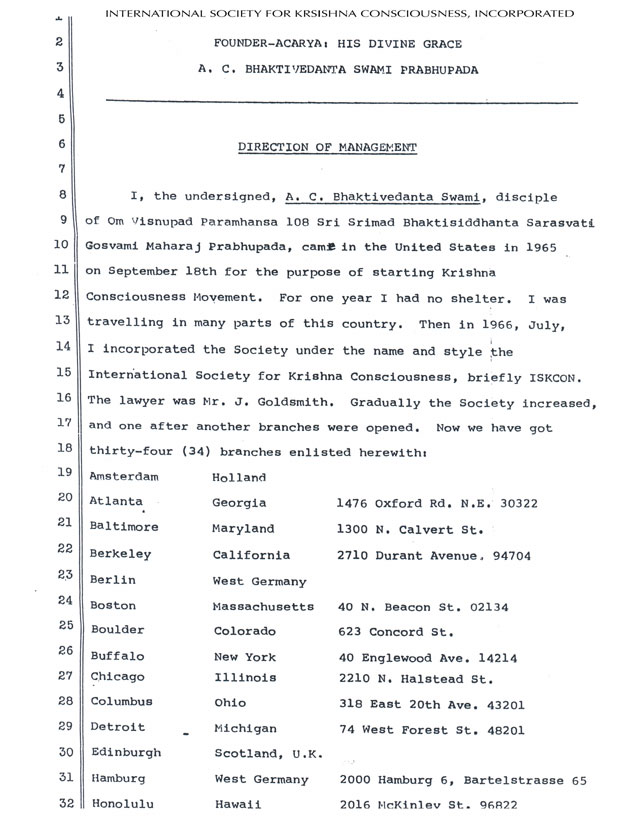
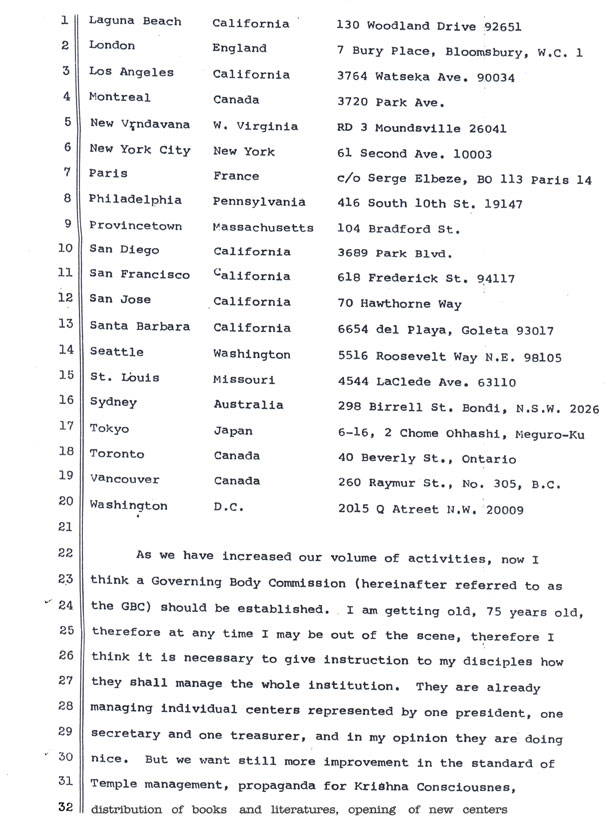
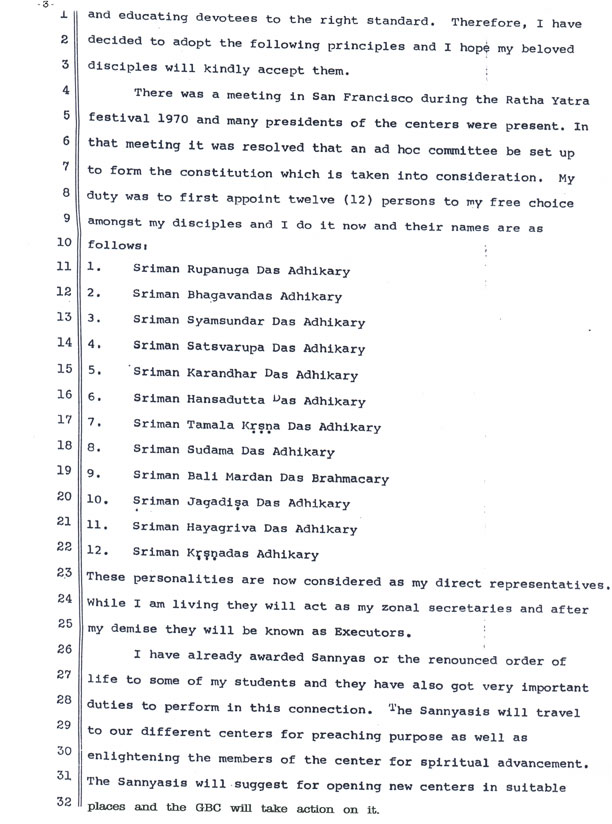
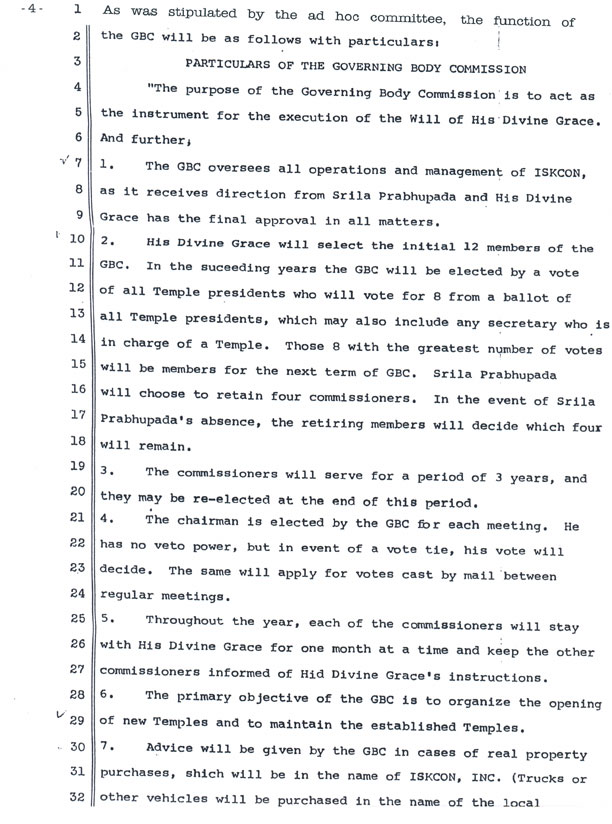
POST SCRIPT : Added Oct 17th, 2004 - Scanned in original ISKCON Constitution from 1970 hand written by Srila Prabhupad (as received in email from Nara Narayan Prabhu)